Solar Panel Cost in Fresno 2026: Real Prices, Central Valley Savings & PG&E Guide
How Much Do Solar Panels Cost in Fresno in 2026?
The average cost of solar panels in Fresno in 2026 is approximately $25,887 before any available incentives, with real market prices ranging from $22,004 to $29,770 depending on system size and the installer you choose. The average cost per watt install in Fresno is $2.40 per watt actually lower than both the San Francisco average of $2.59/W and the statewide California average of $2.52/W. Fresno’s more straightforward rooflines, lower labor costs, and competitive installer market all contribute to keeping installation costs below other California cities.
Here is a complete breakdown of estimate system costs by size for Fresno homeowners:
| System Size | Estimated Cost Before Incentives |
|---|---|
| 5 kW | $12,020 |
| 7 kW | $16,800 – $20,000 |
| 10 kW | $24,000 – $27,000 |
| 10.77 kW | $25,887 (Fresno City Average) |
| 12 kW | $28,800 – $34,560 |
These figures reflect actual installer quote data from the Fresno market in 2026 not theoretical projections. Your final cost will depend on your specific roof characteristics, panel brand selection, inverter type, and whether you include battery storage.
Why Is Solar Less Expensive in Fresno Than Other California Cities?
Fresno homeowners benefit from a combination of factors that keep solar installation costs below California’s urban centers. Labor costs in the Central Valley run significantly lower than in San Francisco or Los Angeles. Most Fresno homes are single-story with straightforward gable.
Hip roofs far simpler to work on than the steep Victorian rooflines common in San Francisco or the complex multistory structures found throughout Los Angeles. Fresno County’s permitting process is also generally more streamlined than major metropolitan city permitting departments, reducing both time and administrative costs. The result is a more accessible entry price for solar without sacrificing system quality.
What Drives the Cost of a Fresno Solar Installation?
While Fresno’s overall installation costs run lower than California’s coastal cities, several factors still significantly affect your individual quote. System size is the most obvious a 10 kW system costs roughly twice a 5 kW system. Panel brand and efficiency rating matter too, standard monocrystalline panels from mid-tier manufacturers cost less upfront than premium brands like SunPower or REC, but premium panels typically deliver higher long-term production, which compounds into greater savings over a 25-year system life.
Inverter type also affects cost standard string inverters are the most affordable option, while microinverters or power optimizers cost more upfront but improve system performance when panels face multiple roof orientations or experience partial shading. Finally, adding battery storage discuss in detail below adds a meaningful upfront cost but substantially improves the economics of solar under PG&E’s current Net Billing program.
Solar Incentives and Rebates Available to Fresno Homeowners in 2026
Fresno homeowners in 2026 have access to several meaningful solar incentives that can substantially reduce the net cost of installation. Understanding each program including its current eligibility requirements and expiration dates is essential for making a fully inform decision.
California Property Tax Exclusion Critical Deadline Approaching
Installing solar panels does not trigger a property tax reassessment, meaning your annual property taxes will not increase even as your home’s market value rises with the addition of a solar system. For a Fresno homeowner installing a $25,000 system, this exclusion prevents an estimate $180 to $300 in additional property taxes per year that would otherwise apply.
What makes this particularly time-sensitive in 2026 is that the exclusion is currently schedule to expire on January 1, 2027. Systems install after that date will not be protect. For Fresno homeowners who are seriously considering solar, this deadline creates a real financial incentive to act in 2026 rather than delay into next year.
DAC-SASH Program Significant Upfront Rebate for Qualifying Fresno Residents
The Disadvantage Communities Single-family Affordable Solar Homes (DAC-SASH) program is one of the most financially impactful solar incentives available to Fresno residents and one that many homeowners don’t know exists. Fresno County contains a significant number of census tracts designate as disadvantage communities under California’s Cal Enviro Screen methodology, making a meaningful portion of the city’s population potentially eligible.
If you own a single-family home in a qualifying DAC census tract and you are a PG&E customer, DAC-SASH offers an upfront rebate of $3 per watt for solar systems between 1 and 5 kilowatts. On a 5 kW system, that’s a $15,000 rebate which can cover the majority or even the entirety of a smaller system’s installation cost. Income limits apply through May 31, 2026: $52,875 for a one-to-two person household and $94,125 for a five-person household. Contact a licensed Fresno installer or visit PG&E’s website to determine whether your address falls within a qualifying census tract.
SGIP Battery Rebate Financial Support for Adding Storage
The Self-Generation Incentive Program (SGIP) provides rebates for residential battery storage systems in PG&E territory. The standard rebate is $150 per kilowatt-hour of battery capacity. For a Tesla Powerwall with 13.5 kWh of usable storage, that translates to approximately $2,025 in SGIP rebates partially offsetting the cost of adding battery backup to your solar system. Income-qualify homeowners in disadvantage communities are eligible for significantly higher SGIP rebates, sometimes covering the majority of battery costs.
Given the importance of battery storage under PG&E’s current NEM 3.0 rules explain in detail in the next section the SGIP rebate makes adding a battery considerably more financially accessible for Fresno homeowners.
PACE Financing Install Solar With Zero Upfront Cost
Property Assessed Clean Energy (PACE) financing is available to California homeowners and allows you to install a complete solar system with no money down. Repayment happens through an assessment add to your annual property tax bill, spread over 10 to 20 years. Because the debt is secure against the property rather than the individual borrower, PACE typically offers more accessible terms than unsecure personal loans. For Fresno homeowners who want to go solar immediately without depleting savings, PACE is one of the most practical financing pathways available.
Federal Solar ITC, What Fresno Homeowners Need to Know in 2026?
The 30 percent Federal Investment Tax Credit long consider the most significant solar financial incentive in the country was terminate early by the Big Beautiful Bill Act sign into law on July 4, 2025. As of 2026, the ITC is no longer available for homeowners purchasing solar with cash or a conventional loan. Homeowners who sign a solar lease or Power Purchase Agreement (PPA) may still benefit indirectly if their provider passes the credit savings along but this should be confirm explicitly with your installer and verify with a qualify tax professional before making any purchasing decision.
PG&E Net Billing (NEM 3.0) How It Affects Solar Economics in Fresno?
Fresno homeowners are serve by PG&E, which means they are subject to California’s NEM 3.0 Solar Billing Plan the same net billing rules that govern solar customers throughout PG&E’s service territory. Understanding how NEM 3.0 works is arguably the single most important thing a Fresno homeowner can do before deciding on a solar system configuration.
The Fundamental Shift From Net Metering to Net Billing
Under California’s original net metering programs (NEM 1.0 and NEM 2.0), homeowners receive credit for export solar electricity at the full retail rate meaning if PG&E charge you $0.40 per kWh for grid power, you also receive $0.40 per kWh in bill credit for every kWh your panels sent back to the grid. The financial math was simple and favorable.
NEM 3.0, which took effect in April 2023, fundamentally change this calculation. Under the current Solar Billing Plan, PG&E compensates export solar at the avoid cost rate the wholesale value of electricity at any given hour rather than the full retail rate. The practical result is that export credits under NEM 3.0 are worth approximately 75 percent less than they were under NEM 2.0. A Fresno homeowner who previously might have export 500 kWh per month and receive $200 in bill credits now receives approximately $50 for the same export electricity.
PG&E Time-of-Use Rates and Peak Hour Pricing
All PG&E solar customers under the Solar Billing Plan are require to enroll in a Time-of-Use (TOU) rate plan. Under TOU pricing, what you pay for electricity from PG&E varies significantly base on the time of day. Peak hours generally 4 PM to 9 PM daily carry rates of $0.38 to $0.61 per kilowatt-hour. Off-peak hours carry considerably lower rates.
For Fresno homeowners, this creates a specific challenge that doesn’t exist in the same way in foggy San Francisco. Fresno’s long, hot Central Valley summers mean air conditioning runs heavily in the afternoon and evening precisely during PG&E’s peak pricing window. Solar panels produce their maximum output between 10 AM and 3 PM, which is before peak hours begin. Without battery storage, the electricity your panels produce during the day gets export to the grid at low NEM 3.0 wholesale rates, while you then draw expensive grid electricity at $0.38 to $0.61/kWh during the peak cooling hours.
Why Battery Storage Changes the Economics of Solar in Fresno?
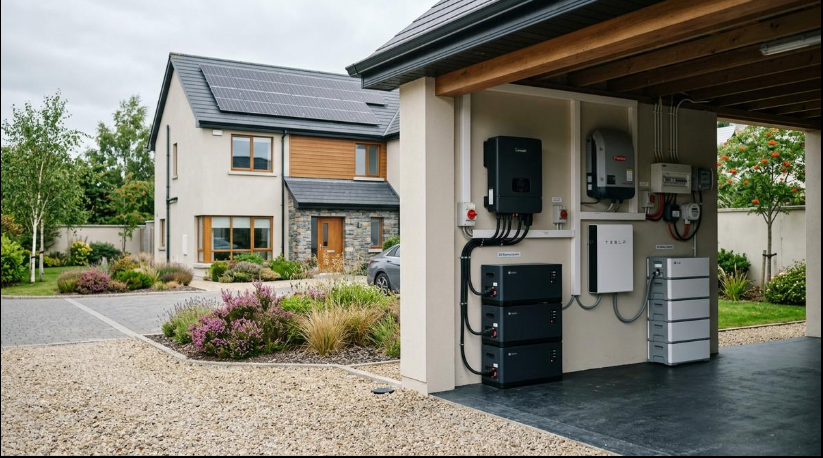
A home battery system such as a Tesla Powerwall, Enphase IQ Battery, or Franklin WH solves the NEM 3.0 problem directly. Instead of exporting your midday solar production to PG&E at low wholesale rates, you store it in the battery and discharge it during peak hours when PG&E electricity would otherwise cost $0.38 to $0.61/kWh.
The financial difference is substantial and in Fresno’s climate, where summer cooling loads are significant and peak hour demand is high, battery storage delivers a particularly strong return on investment. Combine with the available SGIP rebate of $150/kWh, adding battery storage to a Fresno solar installation is one of the most financially sound decisions a homeowner can make in 2026.
How Much Can Fresno Homeowners Save With Solar in 2026?
Fresno offers some of the strongest solar savings projections in California drive by the combination of abundant sunshine, high PG&E electricity rates, and a relatively affordable installation cost compare to coastal cities. The average Fresno household pays approximately $280 per month on electricity $3,360 per year.
At PG&E’s current effective bundle rate of around 40 cents per kWh more than double the national average every kilowatt-hour your panels produce represents genuine, compounding financial value. And with PG&E rates having increase six times between 2024 and 2025 alone, locking in your energy costs through solar is a hedge against a rate trajectory that shows no signs of reversing.
Base on real marketplace data from actual installer quotes in Fresno:
| Timeframe | Estimated Cumulative Savings |
|---|---|
| Year 1 | $3,300 |
| 5 Years | $18,400 |
| 10 Years | $43,800 |
| 25 Years | $171,901 |
That 25-year savings figure of $171,901 is the highest of any city cover on this site higher than Los Angeles, San Diego, San Francisco, and Sacramento. It reflects Fresno’s exceptional solar production potential combine with PG&E’s above-average electricity rates.
Solar Payback Period in Fresno
| System Configuration | Estimated Payback Period |
|---|---|
| Solar Only | 6 – 7 years |
| Solar + Battery | 7 – 8 years |
After payback, your system continues generating essentially free electricity for another 17 to 19-plus years delivering pure, compounding financial returns for the remainder of its operational life.
Fresno vs. Other California Solar Markets ,How Does It Compare?
One of the most useful perspectives for a Fresno homeowner evaluating solar is understanding how Fresno’s solar market compares to other California cities because the differences are significant and directly relevant to your decision.
| City | Avg. Cost Before Incentives | Cost Per Watt | 25-Year Savings |
|---|---|---|---|
| Fresno | $25,887 | $2.40/W | $171,901 |
| Sacramento | $23,780 | $2.52/W | $170,132 |
| San Francisco | $21,604 | $2.59/W | $125,202 |
| California Avg. | $22,529 | $2.52/W | $130,179 |
Fresno’s higher system cost relative to Sacramento reflects the larger average system size need to offset Fresno’s higher air conditioning loads. But Fresno’s 25-year savings of $171,901 the highest in this comparison reflects the city’s extraordinary solar production potential and PG&E’s high electricity rates.
Choosing a Solar Installer in Fresno, What Actually Matters?
Fresno’s competitive installer market 33 active companies as of 2026 means homeowners have genuine choice. But more options also means more due diligence is require to identify installers who deliver quality work at fair prices rather than cutting corners.
What to Verify Before Signing Any Contract?
Every installer you seriously consider should hold a valid California State License Board (CSLB) license. Look specifically for the C-10 (Electrical) or C-46 (Solar) license classification. Beyond the license, prioritize installers who hold NABCEP (North American Board of Certified Energy Practitioners) certification the industry’s gold standard for solar installer competency. Check reviews across Google, Yelp, the Better Business Bureau, and the Energy Sage marketplace, paying particular attention to how installers handle issues that arose after installation was complete.
Verify warranty terms carefully: 25-year panel production warranties are standard in the industry, and any installer offering shorter terms should raise questions. Workmanship warranties should cover a minimum of 10 years. Finally, confirm that your installer handles all Fresno County permit filings and PG&E interconnection applications on your behalf any installer that passes this responsibility to the homeowner is a red flag.
Questions Worth Asking Every Fresno Installer
- How many solar installations has your company complete specifically in Fresno County?
- Are you familiar with Fresno County’s permitting requirements and typical review timelines?
- What production guarantee are you willing to provide in writing?
- Which battery storage systems do you install, and can you walk me through the SGIP rebate application process?
- What is your process if my system produces less electricity than your initial estimate?
Solar Panel Maintenance in Fresno’s Central Valley Climate
Fresno’s climate creates specific solar maintenance considerations that differ from coastal California cities. The Central Valley’s dry summers produce significant agricultural dust, particulate matter from valley winds, and occasional wildfire smoke all of which accumulate on panel surfaces and gradually reduce energy output if not addressed through regular cleaning.
Most Fresno solar installers recommend cleaning panels 3 to 4 times per year more frequently than in coastal cities to maintain peak performance through the critical summer production season. Setting up production monitoring through your inverter’s app allows you to track daily output and quickly identify unexpect drops that might indicate soiling, shading from new obstructions, or equipment issues.
Solar panel efficiency decreases when panel surface temperatures exceed 77°F. During Fresno’s peak summer months, panels may run 10 to 15 percent below their rate efficiency due to heat-relate performance reduction. This is a normal and expect characteristic of photovoltaic technology not a defect and it’s already factor into the savings projections in this guide.
An annual professional inspection of wiring, mounting hardware, and inverter performance is strongly recommend. Total annual maintenance costs for a Fresno solar system generally run $150 to $350 per year.
Is 2026 the Right Year to Go Solar in Fresno?
The Central Valley sun doesn’t charge you anything. Your PG&E bill does at 40 cents per kilowatt-hour, rising year after year with no end in sight. The average Fresno homeowner spending $280 per month on electricity will pay over $197,000 to PG&E over the next 25 years if nothing changes and that projection assumes only a 7 percent annual rate increase, which recent PG&E history suggests may be conservative.
A cost per watt of $2.40, one of the lowest in California. A 6 to 7-year payback period. Over $171,000 in project 25-year savings. A property tax exclusion expiring at the end of this year. And a competitive installer market with 33 companies competing for your business creating real opportunity to negotiate favorable pricing when you compare multiple quotes.
NEM 3.0 change the rules, and the federal tax credit is gone. But Fresno’s combination of abundant sunshine, high electricity rates, low installation costs, and available incentives still makes 2026 one of the best years in recent memory to make the switch.
Frequently Asked Questions:
What is the average cost of solar panels in Fresno in 2026?
The average cost is approximately $25,887 before any available incentives, with real market prices ranging from $22,004 to $29,770 depending on system size and installer. The average cost per watt install is $2.40 lower than the California state average of $2.52/W.
Does Fresno have good solar incentives in 2026?
Fresno homeowners have access to the California Property Tax Exclusion (expiring January 1, 2027), the DAC-SASH program offering up to $15,000 for qualifying low-income homeowners, SGIP battery rebates of $150/kWh, and PACE financing for zero-down installation. The federal ITC is no longer available for cash or loan purchases following its termination in July 2025.
How does PG&E’s NEM 3.0 affect solar savings in Fresno?
NEM 3.0 pays approximately 75 percent less for export solar than the previous NEM 2.0 program. For Fresno homeowners with high summer cooling loads during PG&E’s peak hours, battery storage is strongly recommend to maximize self-consumption of solar production rather than exporting at low wholesale rates.
What is the solar payback period in Fresno?
Approximately 6 to 7 years for solar only and 7 to 8 years for solar plus battery storage one of the shorter payback periods in California given Fresno’s exceptional solar production and high PG&E electricity rates.
How much can I save over 25 years with solar in Fresno?
The average Fresno homeowner saves approximately $171,901 over 25 years the highest project savings of any major California city base on real marketplace data.
Do Fresno’s hot summers negatively affect solar panel performance?
Partially, Panel efficiency decreases when surface temperatures exceed 77°F, leading to roughly 10 to 15 percent output reduction during peak summer heat. However, Fresno’s exceptional sun hours throughout the rest of the year more than compensate, resulting in strong overall annual production.
Will solar increase my property taxes in Fresno?
California’s Active Solar Energy System Exclusion prevents solar installations from triggering a property tax reassessment. Systems install after January 1, 2027 will not receive this protection.