
Solar Battery Backup During California Wildfire Season
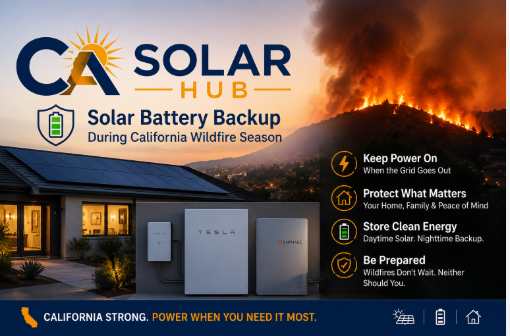
California summers bring more than just sunshine. They also bring wildfire risk, dry winds & something many homeowners have come to dread. When utility companies like Pacific Gas and Electric, Southern California Edison, and San Diego Gas and Electric shut down power lines to prevent wildfires from igniting, entire neighborhoods can lose electricity for hours or even days.
For homeowners with solar panels but no battery storage, this can be a frustrating reality. Your panels stop sending power to your home the moment the grid goes down, even if the sun is shining directly above your roof.
In this guide, we explain how battery storage works during wildfire season, why it matters more in California than almost anywhere else in the country, and what homeowners should know before adding a battery to their solar system.
Why Wildfire Season Changed the Rules for Solar Owners?
Public Safety Power Shutoff events, often call PSPS events, became common practice across California after a series of devastating wildfires link to utility equipment.
During these shutoffs, utilities intentionally cut power in high risk areas to reduce the chance of down lines sparking a fire during dry, windy conditions. For a typical solar only household, this creates an unexpect problem.
Grid tied solar systems are design with an automatic shutoff feature call anti islanding protection. This safety feature prevents your panels from sending electricity into the grid while utility crews may be working on lines nearby.
It is a critical safety measure, but it also means your solar panels go silent during a shutoff, leaving your home without power just like your neighbors who do not have solar at all.
How Solar Battery Backup Solves This Problem?
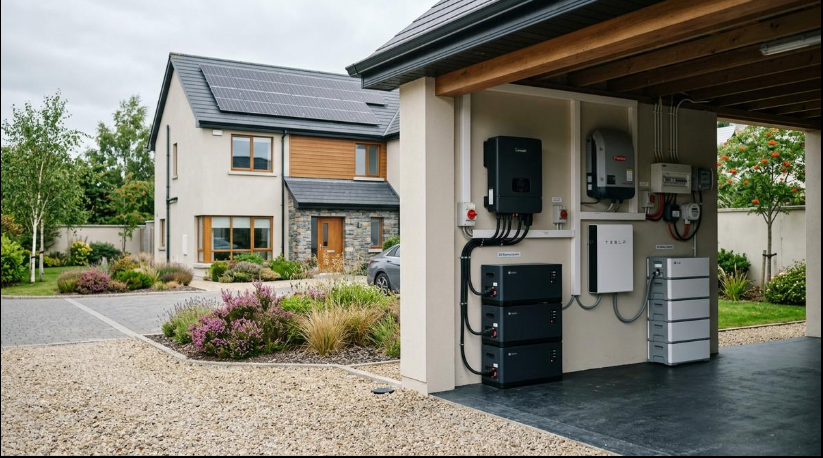
A home battery system, such as a lithium iron phosphate battery from brands like Tesla, FranklinWH or Enphase, stores excess solar energy generated during the day. When the grid goes down, the battery detects the outage and automatically disconnects your home from the utility grid while continuing to supply store power to your essential circuits.
This means your refrigerator keeps running, your medical equipment stays power, your internet and phone chargers continue working, and your home stays livable even during a multi day shut off.
Depending on your battery capacity and household energy use, a properly size system can power essential appliances for one to three days without any sunlight at all, and indefinitely if the sun returns and your panels can recharge the battery each day.
What Size Battery Do You Actually Need?
Battery sizing depends on your daily energy consumption and which appliances you want to keep running during an outage. Most residential batteries are measure in kilowatt hours, commonly short to kWh.
A typical single battery unit stores between ten and thirteen kilowatt hours of usable energy. For homeowners who only want to keep essential circuits running, meaning refrigeration, lighting, internet and a few outlets, a single battery is often enough.
For households that want to run air conditioning, well pumps or medical devices continuously, two or more batteries paired together may be necessary. A license solar installer can review your utility bill and recommend the correct battery size base on your actual energy usage pattern rather than a generic estimate.
The Connection Between Battery Storage and NEM 3.0
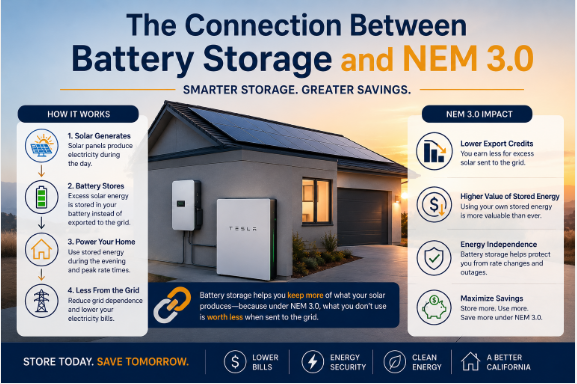
California shift from Net Energy Metering 2.0 to the newer Net Billing Tariff, widely known as NEM 3.0, in April 2023. Under this newer policy, the credit homeowners receive for sending excess solar power back to the grid drop significantly compare to the older program.
As a direct result, battery storage became far more valuable for California solar owners, not just for wildfire resilience but for everyday financial savings.
Instead of exporting excess solar energy to the grid for a low credit, homeowners can now store that same energy in a battery and use it later during expensive evening peak hours, a strategy commonly known as load shifting. This makes battery storage a dual purpose investment, offering both financial return and emergency backup protection at the same time.
Incentives That Can Lower the Cost
California offers financial support for battery adoption through the Self Generation Incentive Program, often refer to as SGIP. This program provides rebates for qualifying battery storage systems, with higher incentive amounts available for homeowners in high fire risk zones or those who rely on medical equipment.
In addition to SGIP, the federal solar investment tax credit can apply to battery storage when it is install alongside or added to an existing solar system, further reducing the upfront cost for many households.
Because incentive programs and funding levels change throughout the year, homeowners should confirm current SGIP availability and eligibility requirements with a licensed installer before finalizing a project.
Signs Your Home Is a Strong Candidate for Battery Backup
Not every household needs the same level of backup protection, but certain situations make battery storage especially valuable. Homes located in designate high fire threat districts experience PSPS events far more frequently than homes in low risk zones.
Households with medical equipment that requires continuous power, families with young children or elderly residents, and homeowners who work remotely and depend on reliable internet access all benefit significantly from having store backup power available.
Rural and semi rural properties across the Sierra foothills, wine country and parts of Southern California chaparral regions tend to experience the longest and most frequent shutoffs, making battery backup less of a luxury and more of a practical necessity in these areas.
What to Expect During Installation?
Adding a battery to an existing solar system typically takes one to two days, depending on the complexity of your electrical panel and whether any upgrades are need.
A license electrician will identify which circuits should be classify as essential loads, install a backup gateway or transfer switch, and connect the battery to your existing solar inverter or a dedicate battery inverter, depending on the equipment brand.
For homeowners installing solar and battery storage together for the first time, the process is generally more streamlined since the system can be designed as a single integrate unit from the start.
Conclusion:
Wildfire season is now a predictable part of life in California, and power shutoffs will likely continue as utilities work to reduce ignition risk across the state. Solar panels alone provide clean energy and lower monthly bills, but they cannot keep your lights on during a grid outage without battery storage.
Adding a battery transforms your solar system from a bill reducing tool into a genuine source of home energy resilience, giving your family power, safety and peace of mind exactly when the grid cannot.