500W Solar Panel: The Complete Guide for California Homeowners (2026)
California homeowner thinking about going solar, the 500W solar panel is the most powerful and cost-effective option available in 2026. With electricity rates from PG&E, SCE, and SDG&E hitting record highs, California residents are turning to 500W panels faster than ever. At CASolarHub, we’ve design and install solar systems across the entire state and in this guide, we break down everything you need to know before making your decision.
What Makes a 500W Solar Panel the Right Choice for California?
California’s climate is uniquely suited for high-wattage solar panels. Most of the state receives between 4.5 and 6.5 peak sun hours per day among the highest in the entire United States. This means a 500W panel doesn’t just perform well here; it performs at its absolute best.
Unlike 300W or 400W panels, a 500W panel uses premium monocrystalline PERC or TOPC on cell technology, which means higher efficiency in real-world conditions including the high temperatures common in the Inland Empire, Central Valley, and Southern California deserts. These panels convert more sunlight into electricity even on hot summer days when standard panels begin to lose efficiency.
California’s ambitious clean energy goals also mean strong local incentives, rebates, and net metering programs that make the 500W panel an even smarter investment. Whether you’re in Los Angeles, Sacramento, Fresno, or San Diego the 500W panel is engineer for the California lifestyle.
Real Power Output of a 500W Solar Panel Across California Cities
One of the most important questions homeowners ask is: how much electricity will this panel actually produce at my address? The answer depends on your city’s peak sun hours and local weather patterns.
Here’s what a single 500W solar panel produces daily across major California cities:
Los Angeles: Receives approximately 5.5 peak sun hours, giving you around 2.75 kWh per day or roughly 1,000 kWh annually from a single panel.
San Diego: Enjoys 5.6 peak sun hours, producing about 2.8 kWh daily. San Diego’s consistent sunshine makes it one of the best cities in America for solar ROI.
Sacramento and the Central Valley: Lead the state with 5.8 to 6.2 peak sun hours. A 500W panel here can produce up to 3.1 kWh per day over 1,130 kWh per year.
San Francisco: Sits at the lower end with around 4.5 peak sun hours due to coastal fog, producing approximately 2.25 kWh daily still excellent by national standards.
With California’s average electricity rate at $0.29 per kWh in 2025, a single 500W panel can save you between $238 and $328 every year. Scale that to a system of 10 panels and you’re looking at $2,380 to $3,280 in annual savings before incentives.
500W Solar Panel and Battery Storage in California
California’s NEM 3.0 policy, introduce in April 2023, change the solar equation significantly. Export rates for excess solar energy drop by roughly 75% compare to NEM 2.0. This means that simply sending power back to the grid is far less profitable than before and battery storage has become essential for maximizing your 500W solar investment.
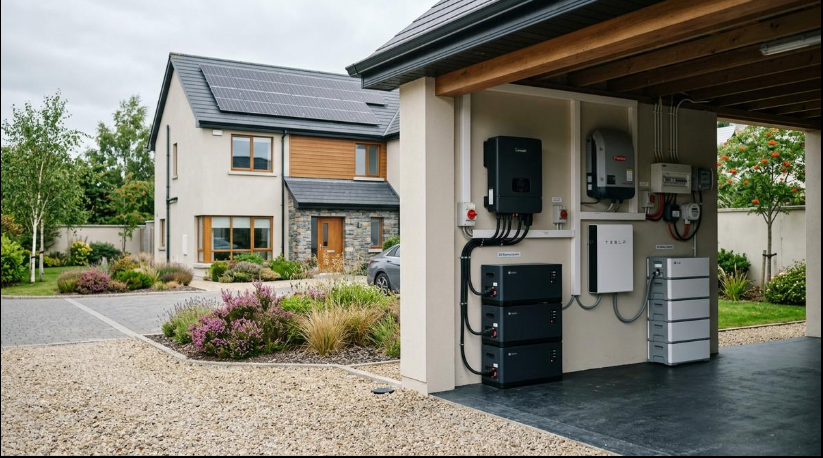
Pairing your 500W panels with a battery like the Tesla Powerwall 3 or Enphase IQ Battery 5P allows you to store energy generate during peak sunlight hours (10AM–3PM) and use it during PG&E’s expensive peak rate window (4PM–9PM). This strategy alone can eliminate most of your evening electricity costs.
California also offers the Self-Generation Incentive Program (SGIP), which provides rebates of up to $200 per kWh of battery storage install. For a typical 13.5 kWh Powerwall, that’s a potential $2,700 rebate stack on top of the federal 30% Investment Tax Credit (ITC).
For homeowners in wildfire-prone areas of Northern California or the foothills, battery storage pair with 500W panels also provides critical backup power during Public Safety Power Shutoffs (PSPS events).
How Many 500W Panels Does a California Home Actually Need?
Sizing your solar system correctly is the most important step in the process. Oversizing wastes money; under sizing means you’re still paying high utility bills. At CASolarHub, we size every system base on your actual 12-month consumption data from your utility bill.
The average California household uses approximately 570 kWh per month lower than the US average thanks to mild weather. However, modern California homes with electric vehicles, home offices, pools, or upgrade HVAC systems can easily consume 900 to 1,400 kWh monthly.
A small condo or apartment using 300 to 450 kWh per month needs 5 to 7 panels. A typical 3-bedroom California home using around 570 kWh monthly is well serve by 7 to 9 panels. A larger home with an EV charger and central AC consuming 900 to 1,200 kWh per month requires 12 to 16 panels. Homes with pools or high energy usage above 1,200 kWh monthly may need 16 to 20 or more panels.
Keep in mind that California Title 24 requires solar on all new residential construction since 2020, so if you’re in a newer home, your system may already be partially size. An expansion with additional 500W panels is often the most cost-effective upgrade.
500W Solar Panel Cost and Long-Term Savings in California
In 2025, a single premium 500W solar panel costs between $250 and $400 for the panel alone. A fully install residential solar system using 500W panels including inverter, racking, permits, and labor typically costs $2.80 to $3.50 per watt in California.
For a 10-panel (5kW) system, expect a total install cost of $14,000 to $17,500 before incentives. After applying the federal 30% ITC, your net cost drops to $9,800 to $12,250. Add California’s SGIP battery rebate and any local utility incentives, and payback periods of 5 to 7 years are common across the state.
Over a 25-year panel lifespan, a properly size 500W solar system in California can generate $40,000 to $70,000 in electricity savings making it one of the highest-return home improvements available to California homeowners today.
Conclusion:
The 500W solar panel represents the gold standard of residential solar technology and California homeowners are uniquely position to get the most out of it. With some of the highest electricity rates in the nation, exceptional year-round sunshine, and powerful state and federal incentives still on the table, there has never been a stronger case for making the switch.
Whether your goal is to eliminate a punishing monthly utility bill, protect your home from grid outages and PSPS events, charge your electric vehicle on clean energy, or simply make a smart long-term investment in your property the 500W solar panel delivers on every front. The technology is proven. The savings are real. The California sun isn’t going anywhere. The only question left is how much longer you’re willing to pay for electricity you could be generating yourself.
Frequently Asked Questions:
How much power will a 500W solar panel produce?
A 500W panel produces 2.25 to 3.1 kWh per day in California, depending on your city and sun exposure. Annually, that equals 820 to 1,130 kWh from a single panel.
How long will a 500W solar panel take to charge a 100Ah battery?
Approximately 3 to 4 hours of good California sunshine, accounting for charge controller losses and real-world inefficiencies.
How many 500W solar panels to power a house?
Most California homes need between 7 and 16 panels, depending on monthly consumption. A CASolarHub energy audit gives you an exact number base on your utility bills.
Can I run AC with a solar panel?
A single 500W panel cannot run central AC. However, 2 to 3 panels can power a mini-split unit, and 4 to 6 panels paired with battery storage can run AC around the clock even at night.
Can a house run 100% on solar?
Yes. California is one of the best states for full solar independence. You need a properly size array, battery storage, and NEM 3.0 enrollment with your utility.
Is there a 1000W solar panel?
No commercial 1,000W residential panel exists in 2025. The 500W panel is currently the most powerful practical option for California homes.
What is the 120% rule for solar?
NEC 705.12 limits your solar breaker to 20% above your panel’s busbar rating. On a 200A panel, your maximum solar breaker is 40A. Your CASolarHub installer handles all compliance checks automatically.
How many 12V batteries to run a 3,000W inverter?
At minimum 3 to 4 × 100Ah batteries in parallel. For sustain loads, 6 to 8 batteries are recommend. A 48V battery bank is strongly prefer for efficiency.
What is the biggest drawback of solar panels?
Intermittency no sun means no production. Battery storage solves this problem, and California’s SGIP rebates make storage more affordable than in any other state.
What is the lifespan of a 500W solar panel?
25 to 30 years, with most manufacturers guaranteeing at least 80% output after 25 years. California’s dry climate means degradation rates of just 0.3 to 0.5% per year.
Why is my electric bill so high if I have solar?
Common causes include an undersize system, NEM 3.0 export rate reductions, panel shading, mandatory utility delivery charges, or a faulty inverter. CASolarHub offers free solar audits to diagnose the exact issue.